
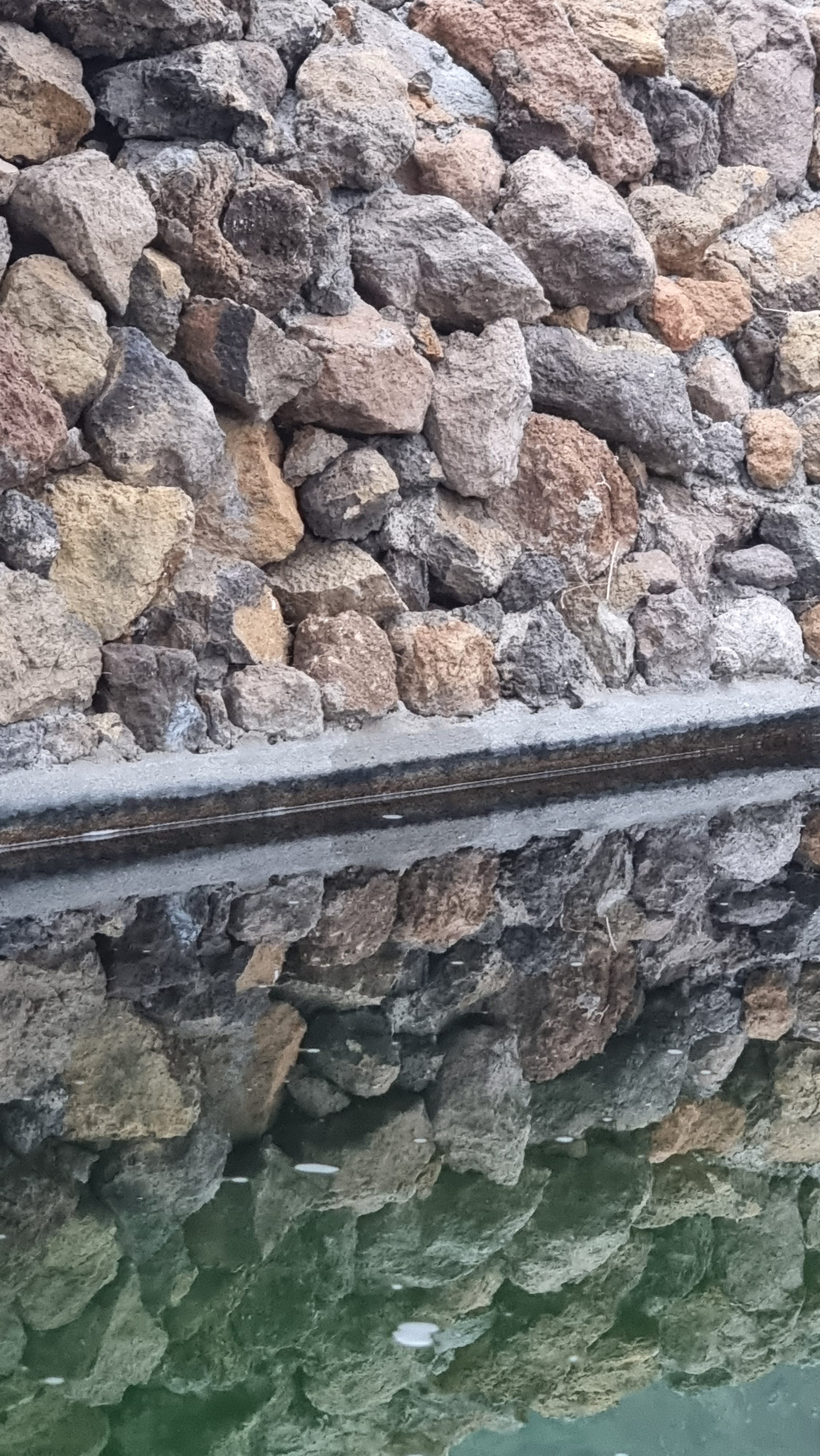
There is a small pond on the Zotanico that I walk past several times a day.
Most days, I barely notice it.
There are chickens to feed, plants that need water, weeds that somehow grow faster than everything else, and usually at least one dog convinced it should be helping.
That morning, however, the water caught my attention.
It was unusually still.
So still that the old stone wall looked straighter in the reflection than it does in reality.
The trees seemed taller.
The sky looked cleaner.
For a moment, the reflection felt more convincing than the things themselves.
Then a fish surfaced.
Not dramatically.
Just enough to touch the surface.
A small circle moved across the water.
The wall bent.
The trees wavered.
The sky broke apart.
A few seconds later, everything looked normal again.
The wall was exactly where it had been before.
The trees too.
The sky hadn't gone anywhere.
Only the reflection had changed.
I stood there longer than I had planned.
Perhaps because the fish had not changed reality.
It had only revealed how much the reflection depended on perfect conditions.
That thought stayed with me throughout the day.
We spend a surprising amount of time looking at reflections.
Reports.
Rankings.
Dashboards.
Awards.
Sometimes we become so focused on what they show that we forget to ask what produced them.
A pay gap is visible.
The decisions behind it are not.
A career can look inevitable.
The opportunities behind it rarely do.
A flourishing garden looks effortless.
Anyone who has spent time in one knows otherwise.
The watering.
The pruning.
The plants that never made it.
The things that had to change before something else could grow.
Very little happens by accident.
Not in a pond.
Not in a garden.
Not in an organisation.
The real question is not whether a reflection looks convincing.
The real question is what remains true when the water moves.